CIPP Pipe Lining for Residential Sewer Lines
Cured-in-place pipe lining builds a new pipe inside the existing sewer line, sealing cracks and root entry points without excavating the full length of the run.
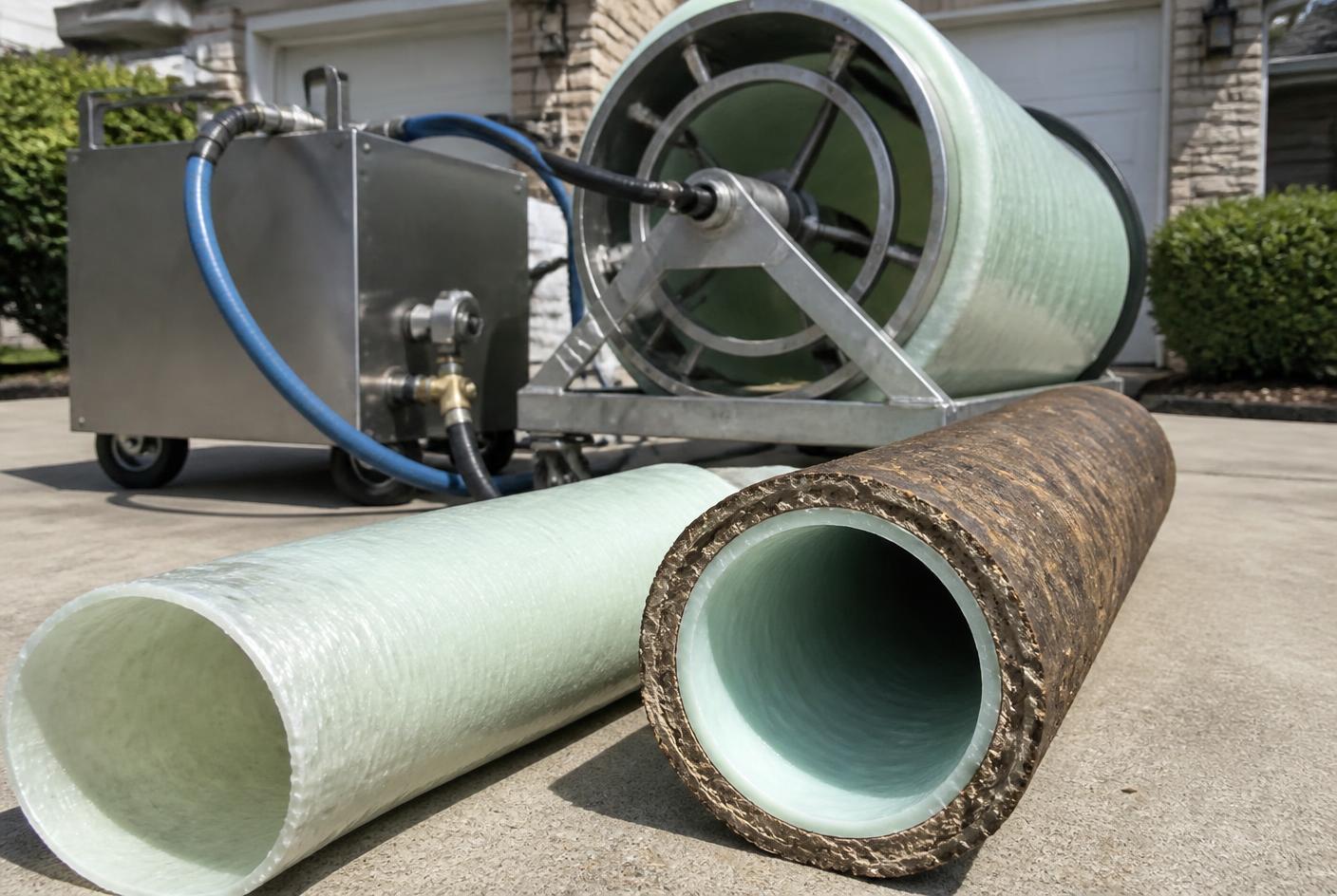
What cured-in-place pipe means
A flexible liner — typically felt or fibreglass — is saturated with a thermosetting resin, then installed inside the host pipe and pressed against its wall while it cures. Once hardened, it forms a continuous, jointless pipe inside the old one. Because the work happens through the pipe, most of it is carried out from an existing cleanout or a single small access point.
How the installation works
- Inspection. A camera survey confirms the pipe material, diameter, defects and whether alignment allows lining.
- Cleaning and preparation. Roots are cut, scale and debris removed, and the pipe is jetted so the resin can bond against a clean wall. This step is often underestimated and it directly affects the result.
- Measurement and wet-out. The liner is cut to length and saturated with resin.
- Installation. The liner is inverted with air or water pressure, or winched into place and inflated.
- Curing. Ambient, hot water, steam or UV curing hardens the resin, depending on the system used.
- Reinstatement and final inspection. Branch connections are reopened and a final camera pass documents the finished line.
Pipe conditions suited to lining
- Cracked or fractured pipe that still holds its round shape
- Root intrusion through open clay joints, once roots have been removed
- Corroded cast iron with a sound remaining profile
- Leaking joints allowing infiltration or exfiltration
Where lining is not the answer
Lining is a rehabilitation method, not a rebuild. It generally cannot resolve a fully collapsed section, a serious sag that holds water, badly offset joints, a crushed pipe or a line laid at the wrong grade, because the liner follows whatever shape the host pipe is in. In those cases pipe bursting or excavation of the affected section is usually discussed instead.
Lining compared with full replacement
Where lining is viable, it tends to mean fewer access pits and less surface restoration than replacing the pipe. Replacement, by contrast, gives you a new pipe on a corrected alignment and can increase capacity. Neither is universally better: the camera survey, the depth of the run and what sits above the line decide it. Our sewer line replacement page covers the replacement side in detail.
Setting expectations
Ask any contractor for the liner and resin system they intend to use, their documented cleaning process, the post-installation camera footage and their written workmanship terms. Those are verifiable. Broad promises about decades of trouble-free service, made without reference to a product specification, are not.
Frequently asked questions
Ask whether your sewer line can be lined
Send your details and any camera footage. A local specialist can confirm whether CIPP lining suits your pipe.
Find the Right Sewer Repair Option
Tell us what's happening with your sewer line and we'll aim to connect you with a relevant local specialist for an estimate.
- • Takes about a minute to complete
- • Useful whether or not you already have a camera report
- • No obligation to proceed with any quotation