Pipe Bursting for Sewer Line Replacement
Pipe bursting replaces a residential sewer lateral along its existing path, breaking the old pipe outward while drawing a new one into place through two small pits.
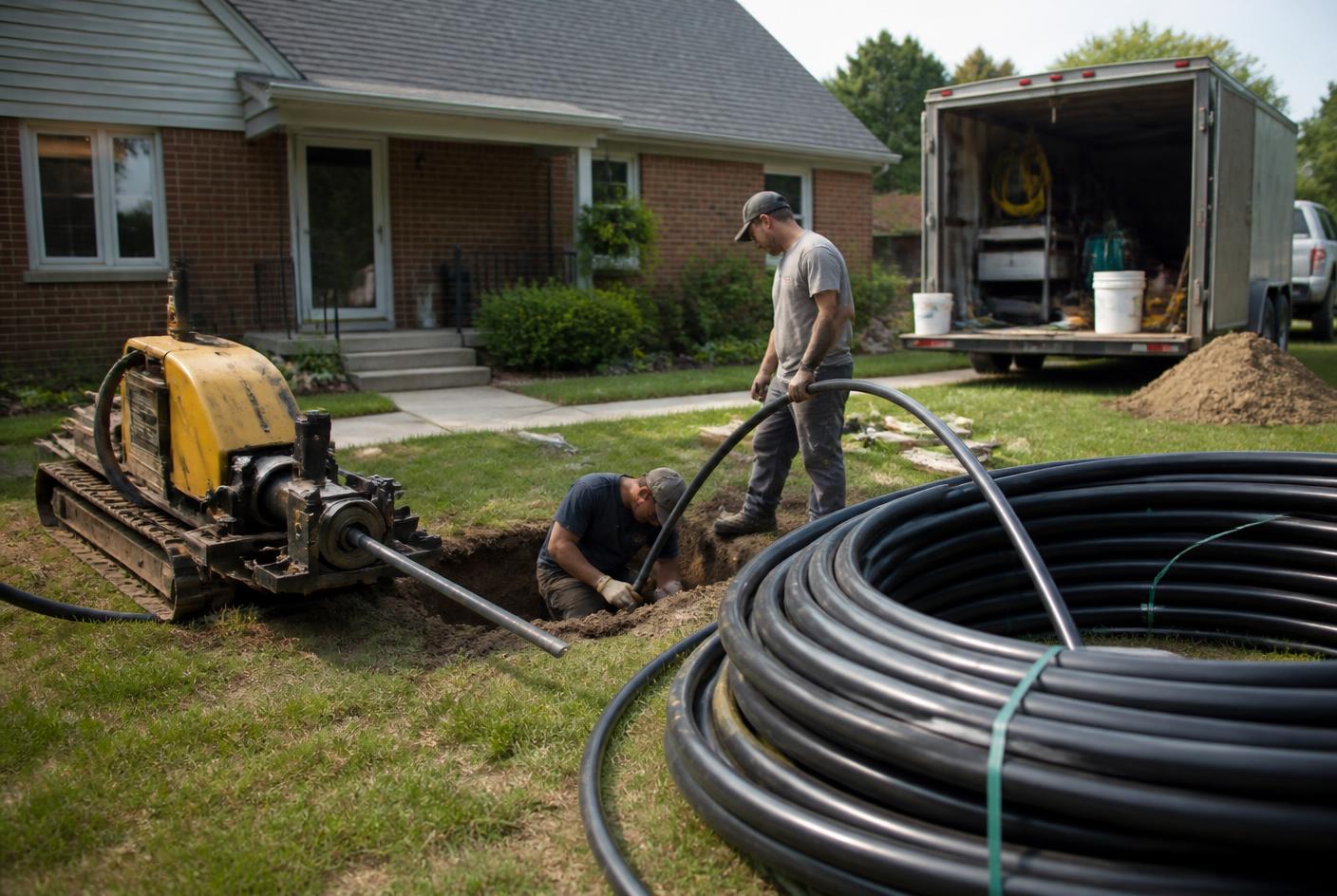
What pipe bursting is
A bursting head — larger than the existing pipe — is pulled through the sewer line by cable or rod from a hydraulic or pneumatic machine. As it advances, it fractures the old pipe and pushes the fragments into the surrounding soil, while the new pipe attached behind it is drawn straight into the void that has just been created.
How the old pipe is broken and the new pipe pulled through
- An entry pit is dug at one end of the run and an exit pit at the other.
- A cable or rod string is pushed through the existing pipe between the two pits.
- The bursting head and new pipe are connected and pulled back through.
- Connections are made up, the line is inspected by camera, and the pits are reinstated.
Why HDPE is commonly used
High-density polyethylene is normally fused into one continuous length before it is pulled in, so the finished lateral has no joints for roots to enter. It is flexible enough to follow the pull and tolerant of ground movement, which matters on Canadian sites that go through freeze-thaw cycles. Other materials are used in some situations; the contractor should explain their choice.
Access requirements
Bursting needs practical space for two pits and for the machine itself. On a narrow urban lot, in a back lane or where the run passes under a structure, the location of those pits is the main planning question. It is also why an accurate locate and depth reading matters before anything is quoted.
When bursting can be preferable to lining
- The pipe has collapsed or is crushed, so there is no sound host pipe to line
- Joints are badly offset or the line has separated
- Corrosion or deterioration is too advanced for rehabilitation
- A larger diameter is wanted and conditions allow upsizing
Bursting versus lining, briefly
Lining keeps the old pipe and rebuilds it from the inside; bursting removes it from service entirely and leaves a new pipe in its place. Lining usually involves less digging; bursting handles worse structural damage. The full comparison is set out here, and the deciding evidence is a camera inspection.
Frequently asked questions
Considering replacement rather than lining?
Tell us what the camera showed and we'll aim to connect you with a local specialist who works with pipe bursting.
Find the Right Sewer Repair Option
Tell us what's happening with your sewer line and we'll aim to connect you with a relevant local specialist for an estimate.
- • Takes about a minute to complete
- • Useful whether or not you already have a camera report
- • No obligation to proceed with any quotation